Jump to a section
Essential dos and don'ts
The few things that make the biggest difference
Do
- Leave a loop of slack at the incision point and tape the tube in 2–3 places, running downward to your thigh.
- Keep the urine bag below bladder level at all times, day and night.
- Drink fluids steadily through the day.
- Sit on a stool to bathe, and clean around the incision point and the tip of the penis daily with a mild or baby soap.
- Wear snug V-cut underwear to support the scrotum and hold the tubes steady.
- Ask about a bladder relaxant medicine if spasms, urgency or poor sleep are wearing you down.
- Report any fever the same day.
- Take a few extra seconds on the toilet, and relax rather than push.
Don't
- Don't tape the catheter upward or tightly across your abdomen. Downward only.
- Don't strain or push to start, continue or finish a stream.
- Don't wait if the catheter stops draining and your abdomen feels full. Inform your doctor.
- Don't try to reinsert a catheter that has come out. Go to hospital.
- Don't scrub the incision point or pull off anything stuck to it.
- Don't cycle, lift heavy weights or sit on hard surfaces until your surgeon clears you.
- Don't panic at a blood tinge, cloudy urine, discharge at the site, or a low-hanging scrotum. All are covered below.
Suprapubic catheter insertion, and 3 days of hospitalisation
Emergency admission · the urgent procedure · bleeding
If you ended up in the ER with sudden trauma or urinary blockage, you need urgent intervention.
Procedures done by the doctor
The doctor asked me to try to urinate before the SPC insertion, but I couldn't.
It's ok — it's because of the injury- This is to see if any urine is able to go through. If not, it confirms the urethra is ruptured.
- Pushing harder does not help, and can force urine out through the injury into the surrounding tissue.
- A few drops of blood, or a small dribble, may come out without any real stream. That still counts as not passing urine.
Why this happens
- Several things block the outflow at once: swelling of the injured or narrowed segment, blood clots inside the channel, and loss of a continuous tube if the tear is complete.
- Pain also triggers a reflex clamp of the external sphincter, adding another layer of obstruction.
The doctor tried inserting a catheter via my penis but was unable to. Why?
It's ok — it's because the passage is torn or blocked- A normal catheter has to travel the full length of the urethra. If that channel is torn or completely narrowed, there is nothing for the tube to follow.
- Trying a size or two and then stopping is good practice, not failure. Repeated attempts can do real damage.
- If it does go through, the urethra still has some shape, and your doctor will decide the course of action accordingly.
- If it will not pass, the alternative is a suprapubic catheter (SPC), which enters the bladder through the lower abdominal wall and bypasses the urethra completely.
Why this happens
- Forcing a catheter past a torn or tightly narrowed urethra can turn a partial tear into a complete one, or push the tip out through the wall and create a false passage.
- Both make the eventual scar longer and the reconstruction harder — so the decision to stop protects the repair you may need months later.
- The SPC also keeps urine away from injured tissue, which would otherwise cause inflammation, infection and heavier scarring.
What actually happens during the suprapubic catheter insertion procedure?
A short procedure under anaesthesia — you will not feel it being done- It is commonly done in an operating theatre under sterile conditions, particularly after trauma.
- You are given anaesthesia, so the procedure itself is not painful. This may be local with sedation, a spinal, or a general anaesthetic. Ask beforehand which one you are having.
- Your bladder needs to be full so it sits high and clear of the bowel. Its position is confirmed with ultrasound, and sometimes a camera, before anything is inserted.
- The skin above the pubic bone is cleaned and draped, a small cut is made, and the tube is passed into the bladder. A balloon at the tip is inflated to hold it in place, and it is stitched or taped to the skin.
- The insertion itself is quick, but with anaesthesia, positioning, imaging and recovery, expect to be away from the ward for a couple of hours. After trauma it often takes longer, since the team may look further before finishing.
- You wake up with the tube already draining into a bag.
- Afterwards: soreness once the anaesthetic wears off, a dressing, blood-tinged urine at first, and often a deep cramping urge to urinate as your bladder objects to the balloon.
What you will feel in the days after
Blood is coming out of my penis in gushes every few hours. Is this normal?
Expected in the first 48–72 hours after an injury- It usually comes in waves or spurts over 48–72 hours rather than a steady drip, and it may even come in heavy doses.
- Dark, clotted blood is the better sign. Flowing, bright red blood should be reported to your doctor.
- Your team will be tracking how much. Inform them if it increases rather than settling.
Why this happens
- The bulbar urethra runs inside the corpus spongiosum — a sponge of erectile tissue packed with blood vessels.
- A straddle impact crushes that sponge against the pubic bone, tearing both the urethral lining and the vascular tissue around it.
- Blood pools inside the urethral channel, then gets pushed out all at once when your pelvic floor contracts, or when you move, cough or stand.
- Most of this bleeding is from the torn spongy tissue and settles on its own.
- Occasionally the small bulbourethral artery running alongside the urethra is damaged, or a weak balloon forms in its wall (a pseudoaneurysm). Then the bleeding is much heavier, or it stops and returns days later despite everything being done correctly.
- Perineal compression often controls that temporarily. If it keeps returning, an angiogram can locate the bleeding vessel and seal it from the inside with a tiny coil. This is a common reason for being moved to a hospital with an interventional radiology unit.
I can feel something moving inside my penis in spurts.
Normal- You are feeling blood and small clots travelling along the urethra.
- People describe it as crawling, pulsing, or something shifting inside. It is not tissue moving.
Why this happens
- The urethral lining is densely supplied by the pudendal nerve, so anything moving inside it is felt sharply and located precisely.
- The bulbospongiosus muscle wraps around the bulbar urethra and contracts rhythmically, milking the channel and moving clots forward in pulses.
My scrotum and the area between my legs are bruised and swollen.
Expected after an injury- Bruising often spreads into a butterfly-shaped patch across the perineum and scrotum, sometimes onto the lower abdomen.
- To control bleeding and swelling, the team may strap a perineal compression bandage in an X shape across the site of the trauma. It is uncomfortable and awkward to sit with, but it is doing real work.
- Colour changes over 2–3 weeks: red, purple, green, yellow. That sequence means it is clearing.
- Contact your doctor immediately if swelling increases rapidly, if the skin darkens or breaks down, or if there is fever with severe pain.
Why this happens
- Blood from the torn spongy tissue tracks along fascial planes under the skin, which channel it into a characteristic shape.
- Scrotal skin is loose and stretchy, so it holds fluid easily and looks dramatic even with modest bleeding.
I keep getting erections, and each one seems to restart the bleeding.
Normal, and not your fault- Erections in these early days often do restart or increase bleeding.
- You cannot prevent them — most happen during sleep, entirely outside your control.
- If night-time erections are causing repeated bleeding or a lot of pain, ask your doctor if any medicine should be taken for the same.
Why this happens
- An erection fills the corpus spongiosum — the exact tissue that is torn — with blood under pressure.
- That pressure lifts fresh clots off the healing surface, so a spurt of blood often follows.
- Erections occur several times a night during REM sleep in healthy men, regardless of desire or injury.
What other potential issues should I check for?
Important to be sure there are no other issues- On the first day, doctors are actively checking for a pelvic fracture, injury to the bladder or rectum, urine leaking into surrounding tissue, and significant blood loss.
- An orthopaedic review, blood tests and imaging are routine for exactly this reason.
- If those came back clear, it genuinely simplifies everything that follows.
Three months at home, with the SPC
Usually around 3 months · waiting for the natural repair
The emergency is over. You're home with a suprapubic catheter, a urobag, and a long wait. It's much safer now, but full of daily practical hurdles.
Living with the catheter, day to day
Why do I have to wait months for surgery? Can't they just fix it now?
The wait is deliberate, and it improves the result- Operating into swollen, inflamed tissue gives the surgeon a blurred picture of what is actually damaged.
- Waiting lets the narrowing settle into a mature, defined scar that can be measured, removed cleanly, and joined.
- Around three months is a commonly used interval before a planned urethroplasty, though your surgeon may choose differently for your situation.
Why this happens
- Freshly injured tissue is fragile — stitches tear through it and the join fails.
- Scar tissue keeps contracting for weeks. Repairing before it stabilises means it can shrink further and narrow the repair again.
- Once it has settled, the surgeon can see exactly where healthy urethra begins and ends, and remove all of the scar in one go.
How should I tape the SPC, and where does it sit relative to my underwear?
Whatever is comfortable for you — top recommendation below- Leave a gentle loop of slack where the tube leaves your abdomen, so movement never pulls on the internal balloon.
- Let the tube run downward towards your thigh, and anchor it in 2–3 places so the weight of the bag never hangs on the incision point.
- Use a butterfly tape: the tape should wrap around the tube and only then stick to the skin, so the tube itself never rests against you and can still shift a little.
- To do it yourself: (1) lay a strip of tape over the top of the tube without touching the skin, (2) bring one side down alongside the tube, leaving a small buffer before the skin, (3) wrap the tape around the other side of the tube, (4) press that end onto the skin.
- Wear the waistband above the incision point. Keep the tube within the underwear and out of the leg-hole, rather than letting the waistband run over the tube — avoid the tube coming out over the top of the waistband. Make sure the waistband does not press on the incision point. If that is difficult, wear underwear whose waistband sits comfortably below the incision point, or one with a soft waistband if it has to sit on top of the tube.
- If that is difficult, wear underwear whose waistband sits comfortably below the incision point, or if the waistband has to sit on top of the tube, choose one with a soft waistband.
- Avoid tight bends, which restrict flow and build pressure whenever the bladder contracts.
- For the first few days, when the area is most painful, it helps enormously to have someone else do the taping. Within a week most people manage alone.
Why this matters
- Any tension on the outside is transmitted directly to the balloon inside, which then drags on the bladder wall. That is felt as a deep tug, a spasm, or a sting at the tip of the penis.
- Repeated traction is also what keeps the skin at the incision point irritated and over-healing.
Is it all right to not wear underwear at all?
Better to wear snug, supportive underwear- A tight V-cut brief is worth wearing throughout this phase, even at home.
- It holds the scrotum up against the body, which relieves heaviness and dragging.
- It also steadies the tube, so the catheter is not swinging and tugging at the incision point every time you move.
- Wear the waistband above the incision point. Keep the tube within the underwear and out of the leg-hole, rather than letting the waistband run over the tube — avoid the tube coming out over the top of the waistband. Make sure the waistband does not press on the incision point. If that is difficult, wear underwear whose waistband sits comfortably below the incision point, or one with a soft waistband if it has to sit on top of the tube.
Why this happens
- The scrotum hangs from the spermatic cords, which carry the blood vessels and nerves to each testis. Left unsupported, its own weight — plus any post-operative swelling — pulls downward on those cords and produces a dull dragging ache.
- Snug underwear takes that weight off the cords and holds the scrotum against the body wall, which also helps swelling drain upward instead of pooling.
- The dartos and cremaster muscles that normally lift the scrotum are temperature-driven and weak at this stage, so external support is doing a job the body cannot yet do for itself.
My catheter is very stiff, and I have been told it will be swapped for a softer one after a few weeks.
Normal — the first tube is deliberately firmer- Many doctors place a firmer catheter at the start, then change to a softer, more flexible one once the tract has settled.
- The firm tube is harder to live with: it does not bend easily, it pulls at the incision point, and it can ache there whenever you move.
- Because it will not curve, taping it is awkward. Work with the direction it naturally points rather than forcing it into a bend.
- Tape it in two places — one close to the site with a gentle loop of slack vertically, one further down — so its stiffness is absorbed by the tape rather than by your skin.
- Do not tape it into a tight curve. A kinked stiff tube restricts flow and pushes back against the incision point.
- Expect this to get noticeably easier once the softer catheter goes in.
- Underwear matters here. Choose a pair whose waistband sits below the incision point, or one with a very soft waistband if it has to sit above — a firm elastic band will push against a stiff catheter all day.
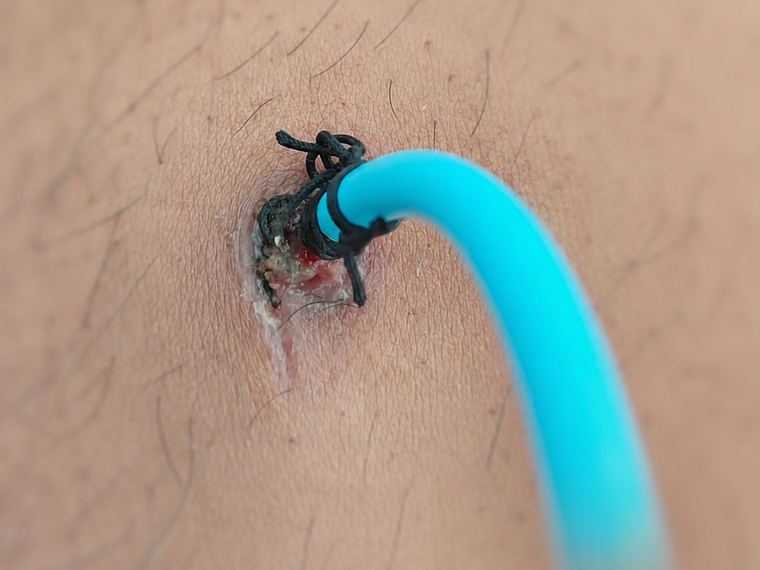
A stiff catheter holds its own curve instead of following your body, making it tug at the incision point.
Why this happens
- A newly made tract has nothing holding it open except the tube, so a firmer catheter is used early to keep the channel stable and reduce the risk of it being displaced.
- Once the tract has matured into a defined channel, that rigidity is no longer needed — so a softer silicone tube, which is far more comfortable and less irritating, can take over.
- The ache at the incision point comes from a stiff tube levering against the skin and muscle every time you move, which is exactly what good taping prevents.
Should I switch between the small day bag and the bigger night bag?
Personal preference — both approaches work- One option is a leg bag strapped to the thigh during the day and the larger bag at night on a stand beside the bed. This makes you feel far more normal and mobile during the day, and is what many people prefer.
- The other option is to keep the large bag throughout — fewer changes, but you have to carry it in your hand.
- Whichever you choose, always keep the bag below bladder level so urine cannot flow back.
How do I take a bath or shower with the catheter in?
Entirely possible — just set it up first- Early on everything feels delicate and bathing does hurt. Go slowly and stop when it stings; it eases within a couple of weeks.
- Go in with the tapes on. There is no need to remove them.
- Sit on a stool. It removes the balance problem completely and is far less tiring.
- Keep everything within arm's reach before you start, so you are never twisting or reaching mid-shower.
- If a tape comes off while you are in there, simply hold the catheter with one hand and finish. Nothing bad happens in those few minutes.
- You can shower with the bag attached. Another option, if you are changing from the night to the day urobag at that time anyway, is to remove the night bag, clamp the catheter, shower, and attach the day bag afterwards. Then you do not have to manage the urobag in the shower at all. But only clamp if your team has said clamping is fine for you.
- Use a mild soap — a baby soap or another gentle, unperfumed one — around the catheter site and the tip of the penis. Harsh or strongly perfumed soap stings and dries the skin at both places.
- Let plain water run over the site rather than scrubbing it, and rinse all the soap off.
- Avoid soaking baths, pools and the sea until your team clears you.
How do I clean around the SPC incision point after a bath?
Gently, and from all sides- Expect to find some discharge or pus around the tube every single day, for as long as the catheter is in place. Cleaning it away is routine maintenance, not a sign of infection.
- Use soft tissue or clean gauze. Pat, don't scrub.
- Clean around the site from all four sides of the tube — crust collects unevenly and it is easy to miss one side.
- Wipe away any discharge or crust that comes off easily. Anything stuck firmly should be left alone rather than pulled.
- Do not rub hard. Rubbing irritates the skin and makes the over-healing tissue bleed.
- Let it dry properly before you retape.
How do I change the urobag without contaminating everything?
Ask your nurse to demonstrate once — then it takes two minutes- Sanitise your hands first — the alcohol also makes the tape much easier to peel off, so do this before removing any tape.
- Sanitise the connector tip of the new bag before you bring it anywhere near the catheter.
- Hold a small tissue at the catheter tip while you disconnect, so any drops of urine land in the tissue rather than on you or the floor.
- Swap the bags quickly and reconnect firmly.
- Seal the used bag inside a zip-lock or kitchen bag before disposing of it. If you swap bags morning and night, you will use two sealed bags a day.
- Retape with the same gentle loop of slack you started with.
Do I need to keep replacing the urobag itself?
Less often than you would think- Your team will typically change the catheter itself every few weeks, and will usually give you a new bag at the same time.
- In between, there is generally no need to replace it unless it starts smelling strongly or looks visibly dirty.
- Follow whatever schedule your own team gives you — practice varies between hospitals.
What actually happens during the routine catheter change?
A quick outpatient swap, usually every few weeks- Most teams change a suprapubic catheter every three to six weeks, in a clinic room rather than an operating theatre.
- The site is cleaned, the retention balloon is deflated with a syringe, and the old tube is slid out. That takes seconds.
- The new tube is passed straight down the same tract and the balloon is re-inflated. Expect a brief deep cramp or an urge to urinate at that moment.
- The whole visit is usually 10–15 minutes, with no anaesthetic beyond a lubricating gel.
- Blood-tinged urine, mild soreness at the incision point, and a few stronger spasms for a day afterwards are all normal.
- A softer catheter is often used from this point onward, which most people find noticeably more comfortable.
Why this happens
- Mucus and mineral deposits build up inside the tube over weeks, narrowing it from within long before anything looks wrong from outside. Changing it on a schedule prevents blockages rather than reacting to them.
- Bacteria form a protective film on the plastic that antibiotics cannot clear. Replacing the tube removes that film along with it.
- The exchange is quick because the tract is now a mature, defined channel — the new tube simply follows the path the old one made.
Can I work, travel and go out with this?
Mostly yes- Desk work and short travel are usually fine — work from home if you can, at least early on. Carry spare bags, dressings and your hospital numbers. A leg bag under loose trousers is invisible to others.
- Heavy lifting, straining, cycling and contact sport are the things to avoid until your surgeon clears you.
What you will see in the tube and around the site
I was told the bleeding would stop in 4–5 days, but I had spotting from the penis for three weeks.
- Occasional pink or brown staining on underwear for two to four weeks is frequently reported.
- What matters is the trend: spotting should become smaller, less frequent and darker over time.
- Fresh bright-red bleeding that returns to day-one volumes does need to be reported.
- Taping a small folded gauze over the tip of the penis applies gentle pressure, which slows the oozing and saves your underwear. Change it whenever it is soiled.
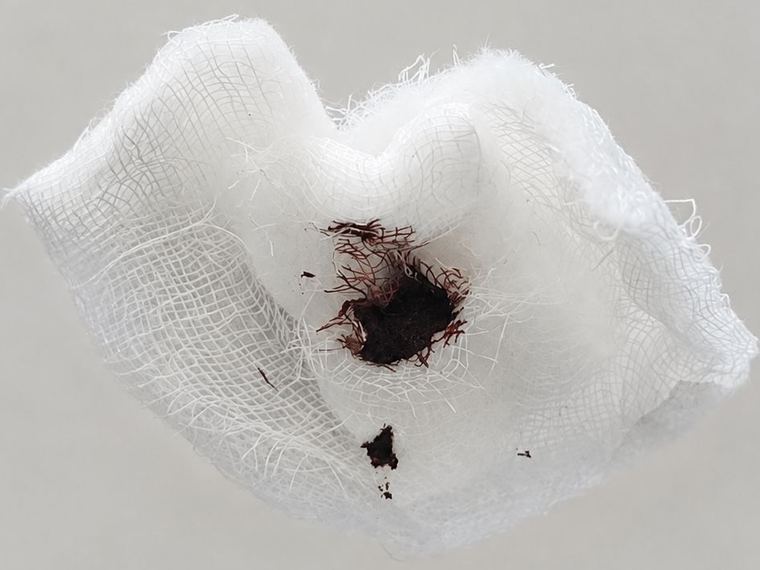
Why this happens
- Healing lining is fragile and re-forms slowly. Small scabs lift off as the tissue remodels.
- Every erection stretches the healing spongy tissue, and every bowel movement or long walk shifts the perineum — each can release a little old blood.
- Brown or rusty colour means old blood that has been sitting there, which is more reassuring than fresh red.
Small amounts of urine or a brownish discharge keep coming out of my penis.
Normal- The urethra is still connected and still producing secretions — it has not switched off just because urine is going elsewhere.
- Discharge is often whitish, yellowish or rusty brown. A folded tissue or a small pad handles it.
Why this happens
- Bladder spasms can push a little urine past the narrowed segment even when the SPC is doing the main drainage.
- The urethra is a mucous membrane with its own glands, which keep secreting regardless of whether urine flows.
- Old blood from the original injury drains out slowly for weeks, giving the brown tinge.
There is some blood at the SPC incision point.
- Spots or streaks on the dressing, especially after a tug, a bath, or a catheter change — common and not concerning.
- Blood that keeps flowing, soaks the dressing repeatedly, or comes with a swelling under the skin — contact your doctor.
- Show the site to your doctor at your next visit. If the skin around it looks irritated or infected they may prescribe an ointment.
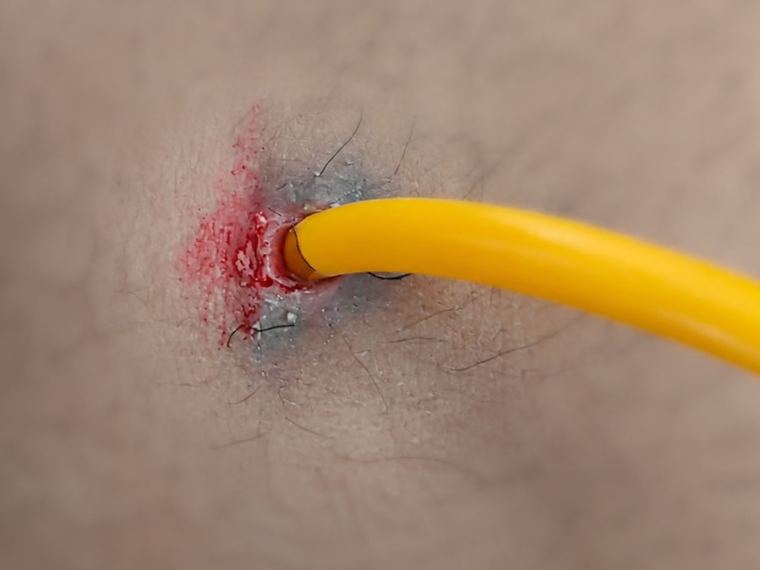
Why this happens
- The tract is lined with fragile new tissue rich in tiny blood vessels, which bleed at the slightest friction.
- Continuous flowing blood is different — it suggests a larger vessel in the abdominal wall is involved, which needs assessment rather than watching.
There is blood in the catheter tube or in the bag.
Usually fine when it is a tinge. Report clots- A pink or light red tinge, or occasional darker wisps, is common — particularly after a catheter change, after exertion, or after straining.
- It usually clears over a day or two, especially if you drink plenty of water.
- Contact your doctor for thick red urine, visible clots, or blood that is blocking the flow.
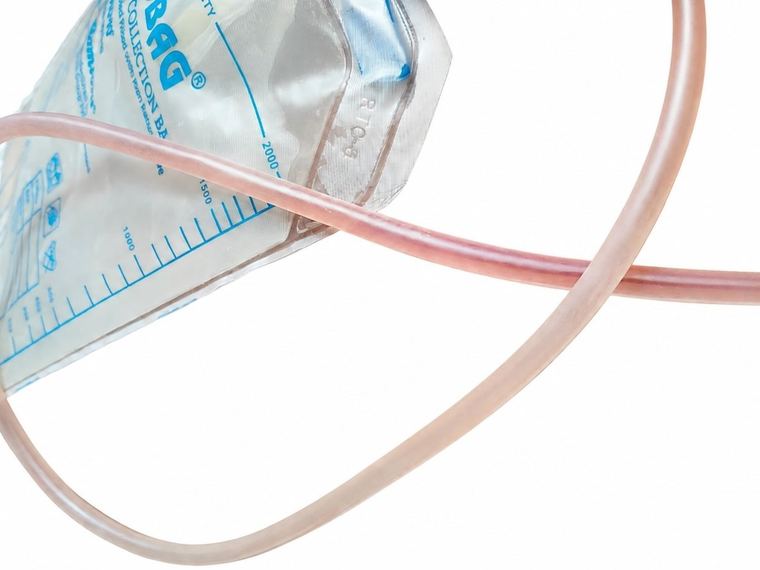
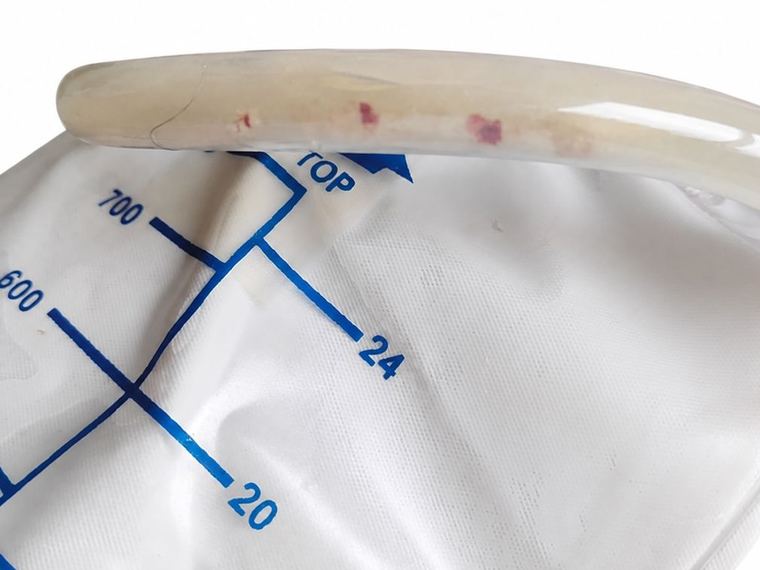
Such red blood particles, or pink to light red blood in the tube, is normal.
Why this happens
- The balloon and the tip of the tube rub against the bladder lining constantly, causing small surface abrasions.
- Bladder spasms squeeze that lining hard against the balloon, which is why bleeding often follows a bad spasm day.
- Clots matter because they can block the tube, which turns a minor problem into retention.
There is a small amount of pus around the SPC incision point.
Normal — you will probably see it every day after a bath- A little yellowish or creamy discharge and crust around the tube is an everyday finding with a long-term catheter.
- It will be there every day for as long as the catheters are in, and it comes back within hours of cleaning. That is the normal state of a tube passing through skin.
- Clean it gently and let the area dry. It reappears; that is not a sign you cleaned badly.
- Report it if it becomes heavier, foul-smelling, or comes with spreading redness, increasing pain or fever — that pattern suggests infection rather than routine discharge.
- Show the site to your doctor at each visit. If it looks infected they may prescribe an ointment, which usually clears it quickly.
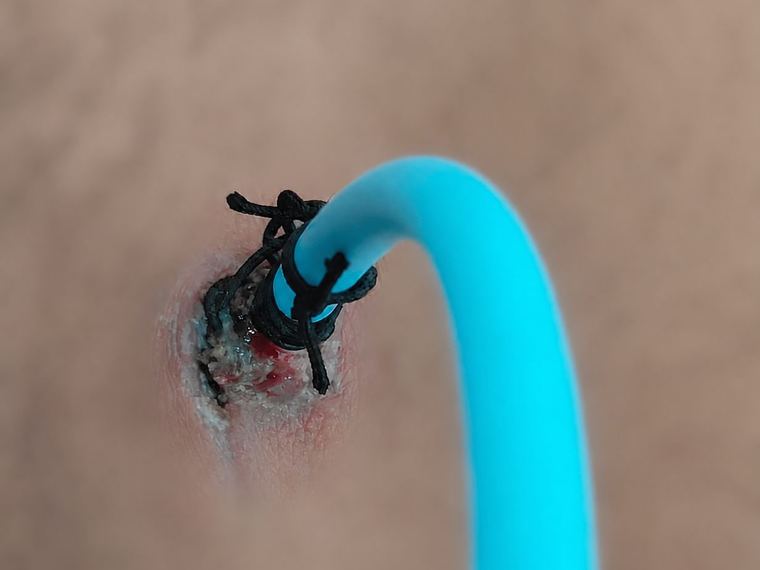
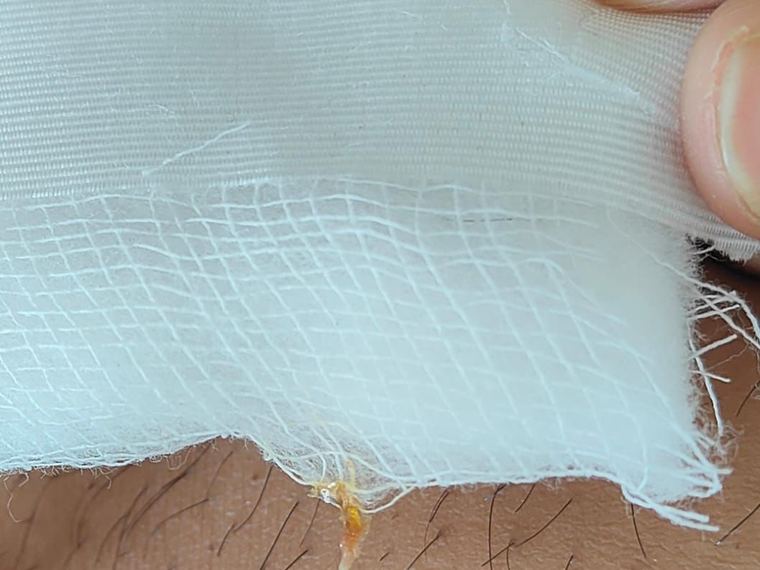
Why this happens
- The tract is a permanently open wound with a foreign object sitting in it, so the body keeps producing a small amount of inflammatory discharge at the surface.
- Moisture, warmth and skin bacteria at the site add to it. This is colonisation, not necessarily infection.
There are cloudy, stringy or flaky substances floating in my urine.
- Most of what you are seeing is material clinging to the inside of the plastic tube and the bag, not something wrong with your urine.
- It looks like white or pale strands, flakes or a cloudy film, and it builds up over the day.
- On its own, with no fever and no pain, it needs no action.
- Drinking enough water through the day keeps it much lighter.
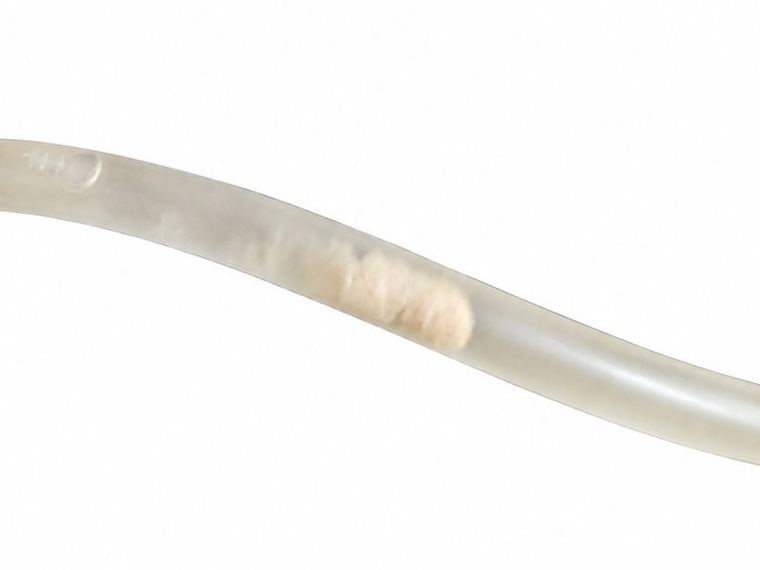
Why this happens
- The bladder produces extra mucus in response to having a foreign object inside it, and that mucus coats the tube.
- Minerals in urine also settle onto plastic surfaces over time, forming a film and small flakes.
- This is also why catheters are changed on a schedule — the build-up eventually narrows the tube from the inside while it still looks fine from outside.
I have a urinary tract infection. Should I be worried?
Very common with a long-term catheter — what matters is whether you have symptoms- Almost everyone with a catheter in place for weeks or months will grow bacteria in their urine. A positive test on its own does not automatically mean you are ill.
- The findings that matter are fever, chills, back or side pain, feeling generally unwell, new pain, or a sudden worsening of spasms.
- Any fever means contacting your doctor the same day — do not wait it out at home. With chills, shivering or back pain, go to Emergency. Let your doctor decide on treatment; do not start or stop antibiotics on your own.
Why this happens
- A catheter is a plastic surface that bacteria colonise as a biofilm — a protective layer that cannot be fully cleared while the tube is in place.
- This is called asymptomatic bacteriuria. Treating it repeatedly tends to breed resistant organisms without making anyone feel better, which is why doctors often deliberately leave it alone.
- The distinction they are making is between bacteria simply living there, and bacteria actively invading tissue — and fever is the clearest signal that it has crossed that line.
Sensations, spasms, erections and sleep
I get a sudden urge to pass urine even though the SPC is draining everything.
Normal — these are bladder spasms- The urge can be intense, sometimes with a cramp low in the abdomen or a sensation at the tip of the penis.
- A few drops may leak out of the penis or around the tube when it happens.
- Many people also describe a vague, hard-to-name feeling of fluid shifting or moving around inside, almost like something is out of balance in the lower abdomen. That is normal too.
- If spasms are frequent or disturbing your sleep, ask your doctor whether a bladder relaxant medicine would help, or whether the one you are on could be adjusted. This is a common and very solvable problem, and it is easy for it to be overlooked when everyone is focused on the repair itself.
Why this happens
- The catheter ends in a small inflated balloon sitting inside your bladder to hold it in place.
- Your bladder wall is lined with stretch receptors. As it drains and shrinks, the wall collapses onto that balloon and reads the contact as "full".
- The bladder muscle then contracts against an object it cannot expel — felt as an urgent, cramping urge.
- Urine now leaves through a tube in your abdomen rather than the route your body has used all your life, so the bladder fills and empties on an unfamiliar rhythm. Your brain has no learned pattern for it, which is why it registers as a strange internal movement rather than a clear signal.
I get a burning feeling at the tip of my penis and a strong urge to urinate. Should I try?
Normal — but don't try to pass urine- As long as urine is collecting in your bag, your bladder is emptying properly and nothing is being retained. The urge is a false signal.
- Trying to void against a narrowed or repaired urethra achieves nothing and adds strain.
- The burning at the tip is a signal coming from your bladder, not damage to the tip itself.
- If it is frequent enough to interfere with your day or your sleep, ask your doctor whether a stronger bladder relaxant medicine is appropriate for you.
Why this happens
- The bladder base and the tip of the penis share nerve pathways through the pelvic plexus and pudendal nerve.
- The brain has no precise internal map for deep bladder sensation, so it assigns the signal to the body part it knows best on that circuit — the tip.
- It is the same principle as heart pain being felt in the left arm.
Should I be on a bladder relaxant medicine while the SPC is in?
Ask your doctor — it is a very reasonable question to raise- The catheter balloon irritates the bladder continuously, so spasms are expected for as long as it is in place.
- Bladder relaxants are commonly used in exactly this situation, and the strength can usually be adjusted if symptoms are severe.
- It is worth raising proactively — it is easy for this to be overlooked when everyone is focused on the repair itself.
- Never start, stop, double or change a dose on your own. If symptoms return after stopping, tell your doctor rather than restarting it yourself.
Why this happens
- These medicines work by damping down the involuntary contractions of the bladder muscle, either by relaxing it during filling or by blocking the signal that triggers contraction.
- Because the trigger — the balloon — is still present, symptoms usually return quickly if the medicine is stopped while the catheter is still in.
I can't sleep because of these sensations.
Common, exhausting, and usually improvable- Experiment with position. Small changes often make a large difference — try lying on the opposite side, adding a pillow under the knees, or being slightly propped up.
- Make sure the tube has slack and is not being pulled by the bag or the bedsheet. Traction at night is a frequent hidden cause.
- Keep the night bag on a stand below bladder level, with enough tubing that turning over does not tug.
- If sensations are still keeping you awake night after night, tell your doctor. Ask specifically whether the bladder relaxant medicine should be adjusted — poor sleep is a legitimate reason to change it, not a complaint to tolerate.
Do I have to sleep flat on my back, or can I turn over?
You can turn — the catheter is designed to allow it- Move the tubing with you before you turn, so you do not roll onto it or pull it.
- Avoid sleeping fully on your front — it presses directly on the site. A pillow between the knees helps on your side.
- You can lie on your back or either side; most people prefer one side. Early on, move slowly and push up with your arms rather than your stomach. It becomes unremarkable within a couple of weeks.
- If your team has given you specific instructions after a procedure, those override this.
Why this happens
- Changing position shifts your pelvic organs slightly, so the balloon rests against a different part of the bladder lining — which is why one side can feel noticeably calmer than the other.
My scrotum feels heavy, hangs low, and has a dragging ache.
Common, and it settles- Snug, supportive underwear — a tight V-cut brief that holds everything close to the body — usually relieves this within a few days, and is one of the most useful things you can do.
- Lying down with a rolled towel supporting the scrotum also helps.
- If the heaviness persists after the swelling has settled, your doctor may suggest a scrotal ultrasound to look for a varicocele or another cause. That is a routine check, not a sign that something is wrong.
Why this happens
- Fluid settles into the most dependent tissue — the scrotum — because of gravity.
- That extra weight pulls downward on the spermatic cord and its nerves, which registers as a dull dragging ache rather than sharp pain.
- A varicocele is a dilated bundle of veins draining the testis. It produces very similar symptoms — heaviness that worsens on standing, a fuller and lower-hanging scrotum — so an ultrasound with Doppler is how doctors tell the two apart, and also rules out fluid collections or inflammation.
My scrotum still hangs low, though the pain and heaviness have gone.
Normal- The absence of pain and heaviness is the meaningful part — it tells you the swelling has resolved.
- Position alone, with no discomfort, has no medical significance.
- A snug V-cut brief holds things comfortably in place while tone returns.
- If heaviness or a dragging ache comes back without swelling, your doctor may suggest a scrotal ultrasound to check for a varicocele — a simple, painless scan.
Why this happens
- Two muscles set scrotal position: the dartos in the skin and the cremaster around the cord. Both are temperature-driven, not strength-driven.
- After weeks of being held up by tight briefs, they have had little reason to contract, so their resting tone is low.
- Tone typically returns over a few weeks once constant support is gradually reduced.
- A varicocele — enlarged veins draining the testis — produces heaviness that worsens on standing and a lower, fuller scrotum, so it can look identical from the outside. Ultrasound with Doppler distinguishes it from simple low muscle tone, and also picks up fluid collections or inflammation.
I get erections, but my foreskin never pulls back fully like it used to.
Normal for this stage- Residual swelling in the penile and perineal tissues limits both full rigidity and foreskin retraction.
- It usually returns as the tissues soften over the following months.
- Important: if you retract the foreskin and it becomes stuck behind the head, swollen and painful, go to emergency the same hour.
Why this happens
- Low-grade swelling thickens the foreskin and reduces its elasticity.
- Pain and guarding also stop the erection reaching full pressure, so the shaft does not lengthen enough to push the foreskin back.
An erection sometimes felt close to ejaculation, but nothing came out.
Normal, and worth understanding- The sensation of climax and the physical expulsion of semen are two separate mechanisms. They can come apart.
- Semen may not appear, may appear later, or may be brown-stained with old blood. All are reported, and none means permanent damage.
Why this happens
- Orgasm is generated centrally in the brain and spinal cord. The expulsion of semen depends on the urethra and the bulbospongiosus muscle contracting in sequence.
- When that segment is narrowed, scarred or obstructed, semen can be held up, released slowly, or pushed backwards into the bladder — while the sensation still occurs normally.
I have not had any erections since the accident.
Common at this stage — but worth raising with your urologist- Erections often disappear for weeks or months after a pelvic injury and its treatment. In most people they return.
- Pain, anxiety, poor sleep and having a tube in place all suppress them, quite apart from any physical damage.
- You may be having them at night without knowing. Waking with one, even occasionally, is a strong sign the machinery is intact.
- Mention it before your surgery. Many teams do a penile Doppler scan beforehand, which records how well the arteries are working and gives everyone a baseline to compare against later.
- This is a normal thing to ask about, and urologists expect the question. Raising it early is better than waiting in silence.
Why this happens
- An erection needs the body to be in a relaxed, parasympathetic state. Ongoing pain, stress and disturbed sleep keep the nervous system in the opposite mode, which actively suppresses them.
- The nerves and arteries supplying the penis run close to the injured area, so bruising or swelling near them can temporarily reduce their function. Bruised nerves recover slowly, over months rather than days.
- There is a real psychological component too — fear of causing damage is enough on its own to prevent erections, and it eases as confidence returns.
Things going wrong
The tube pulls and stings when I bend, sit or turn.
Normal — and mostly fixed by how it is secured- Go back to the taping basics: a loop of slack at the site, downward routing, and 2–3 anchor points down to the thigh.
- Check the tube is not caught under a waistband or a seatbelt.
- Sitting slightly reclined rather than bolt upright reduces pressure through the pelvic floor.
- If a stiff catheter was placed for the first few weeks rather than a flexible one, expect more pulling and stinging than you otherwise would. It improves noticeably once it is swapped for the softer tube.
Urine is leaking around the tube, and my dressing keeps getting wet.
Common — but tell your team if it is constant- Occasional leaking during a spasm or a cough is normal.
- Constant leaking usually means the catheter is partially blocked, so urine is taking the easier route around it.
- Check first: kinked tubing, bag above bladder level, full bag, clothing pressing on the tube.
Why this happens
- Bladder contraction generates pressure. If the tube cannot carry it, the pressure escapes alongside the tube through the tract.
- Debris, mucus and mineral crusting narrow the inside of the tube gradually — it looks fine from outside while the flow has halved.
There is a red, fleshy, easily-bleeding bump at the SPC incision point.
Common — show it to your team, but it is a routine finding- This is extra healing tissue that builds up around the tube — the body doing too much repairing rather than too little.
- It bleeds easily when rubbed and can be tender. It is a healing response, not an infection.
- Reducing tube movement is the main fix.
- Show it to your doctor at the next visit. If it looks infected they may prescribe an ointment or a simple treatment for it, which usually settles it quickly.
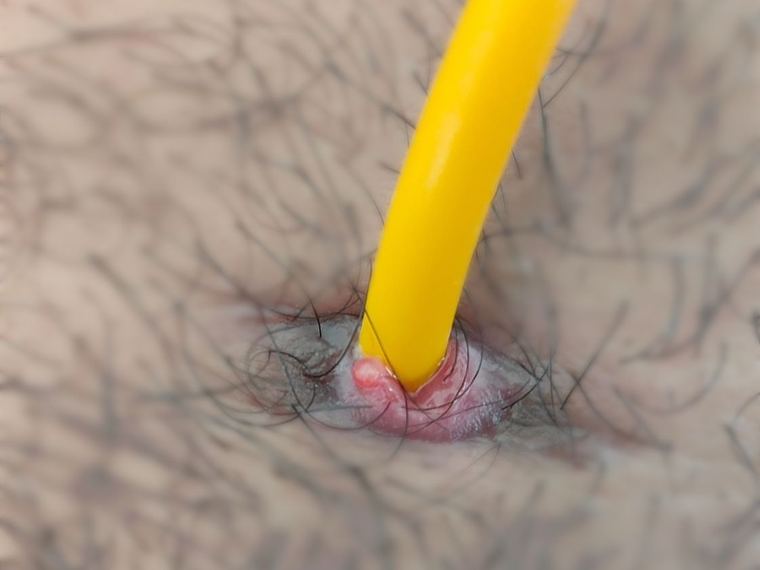
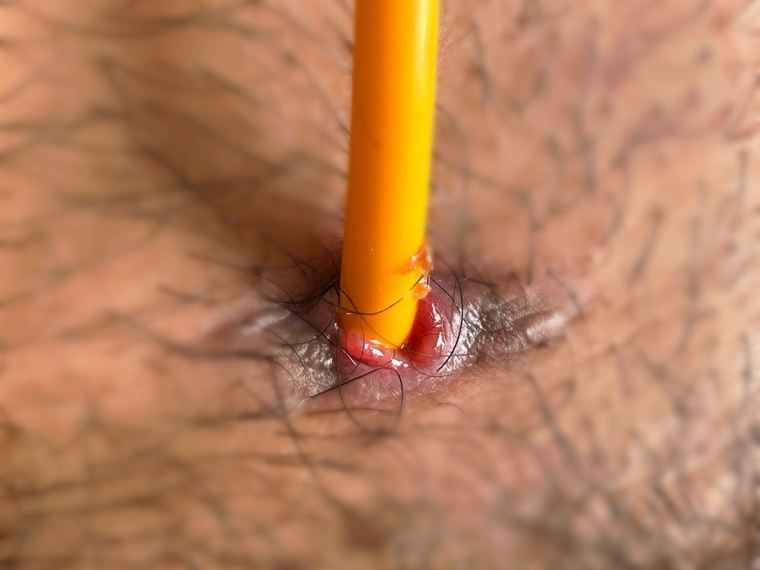
Granulation tissue: a raised, glossy red rim of over-healing skin hugging the tube. It bleeds easily but is a healing response, not an infection.
Why this happens
- The body treats the tract as an unhealed wound and keeps producing repair tissue — new blood vessels and collagen — which piles up at the opening.
- Constant micro-movement of the tube keeps signalling "still injured", so the process never switches off.
The catheter has suddenly stopped draining.
Act on this — do not wait it out- Check for kinks, a full bag, or the bag sitting above bladder level. If nothing drains and your lower abdomen feels full, hard or painful, contact your team or go to hospital.
- Do not try to flush or reposition the tube yourself unless you have been specifically taught how.
Why this happens
- Blockage is usually mucus, a clot, or mineral encrustation building up inside the tube.
- With the urethra not usable, the SPC is your only outlet — so a blockage means genuine retention, with pressure backing up towards the kidneys.
What happens if the catheter gets pulled out?
Go to hospital straight away — do not wait until morning- Do not try to push it back in yourself. A tube reinserted blindly can end up outside the bladder.
- Cover the site with a clean dressing or pad and go in. Take the catheter with you if you still have it, so they know the size.
- Time matters here more than most things in this handbook: the tract can begin narrowing within hours, and once it closes, replacing it becomes a much bigger procedure.
- Prevention is mostly about slack and anchoring — 2–3 taping points, and care when standing up, dressing, and turning in bed.
Why this happens
- The tract through the abdominal wall is held open only by the tube itself. The tissue is elastic and starts to contract as soon as it is empty.
- The retention balloon has to be deflated to come out normally, so if it is pulled out inflated there may be some bleeding and soreness — expected, and another reason to be seen.
I'm constipated, and I'm afraid of straining.
Worth taking seriously and raising early- Reduced movement, painkillers and drinking less all push you towards constipation.
- Ask your doctor about it early rather than waiting for it to become a crisis — it is a routine thing for them to manage.
- Fluids, fibre and short walks do most of the work.
Why this happens
- Straining raises pressure across the entire pelvic floor and perineum — the region that is healing.
- The rectum sits directly behind the urethra, so a loaded bowel can also worsen bladder spasms and the feeling of pressure.
The 3 days in hospital for the urethroplasty
Admission · the tests · the operation · discharge
You'll be admitted a day or two early for imaging that maps exactly where the narrowing is and how long it is. Some tests feel strange and exposing — none are things you can pass or fail.
Tests before the surgery
What actually happens during the RGU / MCU test?
Two X-ray tests done together, usually in about 20–30 minutes- You lie on an X-ray table. A dye that shows up on X-ray is put into the urethra through the tip of the penis, and also into the bladder through the SPC.
- You are then asked to pass urine while the X-ray runs, so they can watch the dye move.
- If you cannot pass anything, that is the result, not a failure. It tells the surgeon the narrowing is complete.
- Expect a full, urgent, slightly panicky feeling and a sense of pushing against a wall. It passes as soon as they drain you.
- Some dye or a little blood may come out for a day afterwards. That is expected.
Why this happens
- The RGU pushes contrast up the urethra from the tip, showing the healthy channel from below up to where the scar starts.
- The MCU fills the bladder through the SPC and asks you to void, so contrast comes down from above to where the scar ends.
- Where the two columns stop is the length of the gap, and that measurement determines the whole surgical plan.
- If the narrowing is complete, no fluid can physically pass — so voiding is impossible no matter how hard you try.
What actually happens during the penile Doppler test?
Usually much easier than you are expecting- A small injection into the side of the shaft triggers an erection, and ultrasound then measures blood flow in and out.
- Most people report a brief sting, then warmth and a dull ache — usually considerably less unpleasant than the warning beforehand suggests.
- The erection can last 30–60 minutes afterwards. If it lasts more than 4 hours and is painful, go to emergency.
Why this happens
- Pelvic and perineal trauma can damage the arteries that supply the penis, and this is easy to miss without testing.
- The injection relaxes the smooth muscle of the erectile bodies so inflow and outflow can be measured under standard conditions.
- Doing it before surgery establishes a baseline. If erections change later, everyone knows what you started with — which protects you.
The surgery itself
What actually happens during the urethroplasty surgery?
A planned operation of a few hours, usually under spinal anaesthesia- Nil by mouth from the night before, and the area is shaved and cleaned in the morning.
- Spinal anaesthesia is common for this operation — an injection in the back numbs you from the waist down, usually with sedation so you doze through it. Recovery afterwards is quicker and there is less nausea than with general anaesthesia.
- You are positioned with your legs raised and apart, so the surgeon can reach the perineum. This is done after you are numb.
- The operation itself commonly takes two to four hours depending on the length of the narrowing.
- You wake up with two catheters, a dressing between your legs, and often a small drain. Your legs feel heavy and useless for a few hours until the spinal wears off — expected, and it passes completely.
- Most people are moved back to the ward the same day, and stay two to four days.
What they do inside
- A vertical cut is made in the perineum — the area between the scrotum and the anus. Depending on where the narrowing sits, it may extend a little way onto the lower part of the scrotum.
- Muscle layers are separated, not cut through, to reach the urethra underneath.
- The scarred segment is removed completely. That is the key step.
- The two healthy ends are opened out lengthways and stitched directly to each other over a catheter (an anastomotic repair). If the narrowing is long, a graft — often taken from the inside of the cheek — may be used to widen the channel instead.
- The muscle is closed back over the repair, a small drain is left for a day or two, and a compression dressing goes on.
Why this happens
- Cutting or stretching a narrowing from the inside only pushes the scar aside, and it reliably comes back. Removing it deals with the problem itself.
- Opening out both ends turns a narrow round join into a wide oval one, so even if the scar contracts slightly the channel stays open.
- Closing the muscle over the repair restores blood supply and support to the join.
- The compression dressing limits bruising in tissue that swells very easily.
Why is the cut in such an awkward place?
Because that is where the urethra is- The bulbar urethra sits deep in the perineum, and that is the only direct route to it.
- If the narrowing extends further forward, the cut may run up onto the lower scrotum as well. That is planned, not a complication.
- The incision follows the natural midline seam, which heals into a discreet line.
- It does mean sitting is uncomfortable for the first couple of weeks. A cushion with a cut-out helps a great deal.
Why this happens
- The midline is a natural plane between paired muscles, so the surgeon separates structures rather than cutting across them.
- The nerves that matter for scrotal and erectile function run to the sides and deeper, away from this approach.
Waking up afterwards
Why do I have two catheters after the operation?
Both are planned, and each has a different job- The penile catheter sits across the new join, holding the two ends lined up while they knit together. It is acting as a splint, not as a drain.
- The SPC does the actual work of emptying your bladder, so urine stays away from the fresh repair.
- Both are temporary. The penile one usually comes out first, after a few weeks.
Why this happens
- A fresh join in the urethra needs two different things: something to hold its shape, and no urine flowing across it while it heals.
- One tube cannot do both — a catheter that carries urine also has to sit in the flow path. So the jobs are split between two tubes.
- Keeping urine away from the join in the early weeks is what prevents leakage, infection and heavy scarring at the repair.
The month at home, with both catheters
Roughly 3–4 weeks · SPC and penile catheter together · the wound heals
The repair is done. Nothing is asked of you now except patience. It feels slow, and the stitches are in an inconvenient place, but almost every sensation here is mechanical — two tubes and one healing seam.
Managing two tubes
How do I tape both catheters, and how do they sit with my underwear?
Anchor each one separately, and keep them from crossing- Tape each catheter on its own side so they do not cross, rub against each other, or pull one another when you move.
- Anchor each tube in 2–3 places on its way down to the bag, so the weight of a filling bag is carried by the tape on your thigh and never hangs from the incision point or the tip of the penis.
- In the first days after surgery, ask someone to help with the taping. Bending and reaching is exactly what hurts most, and a second pair of hands makes it far easier. You will be doing it yourself within a week or two.
- Leave a loop of slack at both exit points — the abdomen for the SPC, and the tip of the penis for the penile catheter.
- The penile catheter should rest without tension. Do not let its weight hang from the tip; anchor it to the upper thigh or lower abdomen so the tip is never being dragged sideways.
- The SPC runs downward as before, on the opposite side, to its own bag.
- Wear the waistband above the incision point. Keep the tube within the underwear and out of the leg-hole, rather than letting the waistband run over the tube — avoid the tube coming out over the top of the waistband. Make sure the waistband does not press on the incision point. If that is difficult, wear underwear whose waistband sits comfortably below the incision point, or one with a soft waistband if it has to sit on top of the tube.
- If that is difficult, wear underwear whose waistband sits comfortably below the incision point, or if the waistband has to sit on top of the tube, choose one with a soft waistband.
- Check the taping every time you get up. Most of the sharp, sudden sensations in this phase come from a tube that has quietly moved.
How do I bathe with two catheters?
The same way, with more care- The first few times everything feels fragile and it does hurt. Go slowly, keep it short, and build up.
- Go in with the tapes on, and sit on a stool.
- You can go in with the bags attached — with two tubes, unclipping things adds risk rather than convenience.
- If a tape comes off, hold that catheter with one hand and finish calmly.
- Use a mild soap — baby soap or another gentle, unperfumed one — around the SPC site and the tip of the penis, and rinse it off completely.
- Keep the stitch line out of direct spray if your team has said to, and pat everything dry afterwards rather than rubbing.
How do I clean around the penile catheter after a bath?
Gently, and every day- There will be some discharge or crust every day while the catheters are in. Finding it is expected, not a warning sign.
- Hold the catheter steady with one hand so it is not being pulled while you clean.
- If you have a foreskin, ease it back only as far as it moves comfortably, clean, and always bring it forward again afterwards.
- Wipe from the tip of the penis outward, away from the opening — never back towards it.
- Use a mild or baby soap on the skin, then rinse fully. Crust collects where the tube meets the opening, so clean all the way around the tube.
- Pat dry with a soft tissue. Leaving the area damp is what causes most of the soreness at the tip.
- Do not push anything into the opening, and do not pull off crust that is stuck firmly.
Why this happens
- Bacteria travel up the outside of a catheter, so wiping away from the opening keeps skin organisms moving away from the bladder rather than towards it.
- Secretions and old blood dry into a crust at the junction, which traps moisture and rubs the sensitive lining at the opening with every movement.
Should I keep switching between the day leg bag and the night bag in this phase?
Personal preference — but most people stop bothering in this phase- With two catheters, swapping bags means four changes a day instead of two, which is a lot of work when you are mostly resting anyway.
- A simpler approach: keep the larger bags on at home, and switch to leg bags only on the occasions when you have to step out.
- If you are up and about more, the leg bags may be worth the extra effort. Either is fine.
What you will see and feel
My stitches hurt a lot when I move, walk or sit.
Common in the first weeks — and cleaning daily helps more than you would expect- Pain on movement is expected while the stitches are fresh. It should reduce week by week, not increase.
- Bathe every day. Dried blood and crust collect along the stitch line, and once that hardens it pulls on the skin with every step — a lot of the sharp movement pain comes from this rather than from the repair itself.
- Clean gently with a mild or baby soap, rinse fully, and pat dry. Do not scrub or pick at anything stuck firmly.
- Sit slightly reclined with your weight on your thighs, or use a cushion with a cut-out.
- Tell your doctor if pain is increasing after the first few days, or comes with redness, heat or fever.
Why this happens
- The incision sits in skin that stretches and folds with every step, so the wound edges are pulled apart slightly each time you move.
- Dried blood forms a rigid crust across a surface that needs to flex. It tugs on healing skin and can crack open small areas, which is why keeping it clean and supple reduces pain.
- The area is also warm, moist and closed in, so crust and discharge build up faster here than on a wound anywhere else on the body.
Can I walk?
Yes — and a little every day is actively encouraged- Short, gentle walks soon after the surgery are good for you, not a risk. Confirm with your team, then start.
- Walking is not the same as exercising. No jogging, no stairs repeatedly, no lifting until you are cleared.
- Empty the bags and check both tubes are secured before you set off, so nothing swings or tugs. Stop if pain increases, fresh bleeding appears, or you feel dragging at the incision point.
Why this happens
- Lying still for weeks carries its own risks — blood clots in the legs, chest infection, constipation and stiffness. Gentle movement is what prevents all four.
- Walking does not stretch or load the repair. What threatens a fresh join is straining, heavy lifting and direct pressure on the perineum, none of which walking involves.
- It also helps the bowels move, which matters because straining at stool puts far more pressure on the healing area than a walk ever will.
Sitting is painful. Am I damaging the repair by sitting on it?
No — but sit smartly- The repair is deep and protected by muscle. Ordinary sitting does not undo it.
- Use a cushion with a cut-out, or sit slightly reclined with your weight on your thighs rather than the perineum.
- Avoid long car journeys, hard chairs, and anything resembling a bicycle saddle.
Which body positions are comfortable while the stitches heal?
Position matters more than you would expect- A pillow between the knees when lying on your side is the single best trick. It stops the thighs pressing together, so the stitches stay open to the air and stay dry.
- On your back with knees slightly bent over a pillow takes tension off the perineum. Lying completely flat with legs straight pulls on the stitch line.
- One leg drawn forward while on your side works well for some people and not others. Go by comfort — there is no correct version.
- Avoid lying face down. It presses directly on the repair and on the SPC site.
- Sitting: recline slightly with your weight on the thighs, or use a cushion with a cut-out. Avoid hard chairs and long car journeys.
- Getting up: roll onto your side and push up with your arms rather than sitting straight up using your stomach.
Why this happens
- The perineum is warm, enclosed and sweaty. Trapped moisture softens the healing edges and encourages infection, so anything that ventilates the area helps it heal faster.
- Skin here stretches and folds with every movement, so positions that keep the thighs apart reduce the pull on the stitch line and the pain that comes with it.
My scrotum and penis are swollen and bruised again after surgery.
Expected- Usually peaks in the first week, then settles over two to three weeks.
- A snug V-cut brief, elevation when lying down, and avoiding long periods standing all help.
- Contact your doctor immediately if the swelling increases rapidly, becomes hard and hot, if the skin darkens or starts breaking down, or if it comes with fever.
Why this happens
- Surgical fluid and blood track down the same tissue planes into the loose scrotal skin.
- Gravity concentrates it there, which is why support and elevation make such a visible difference.
There is blood in the penile catheter or the SPC.
A tinge is expected after surgery. Clots need reporting- Pink or light red urine in the first days after the operation is expected and usually clears steadily.
- It can flare briefly after moving, an erection, straining or a bump to the tube, then settle again.
- Contact your team for thick red urine, visible clots, blood that keeps getting darker or heavier, or any blood that blocks the flow.
- Drinking enough water genuinely helps clear it.
Why this happens
- There is a fresh suture line inside a very vascular tissue, plus two balloons resting against the bladder lining.
- Any movement of the tubes disturbs healing surfaces, so small bleeds are common and self-limiting.
- Clots matter because they can block a tube — and with a fresh repair, a blocked tube is a problem you want caught early.
Brownish-red or whitish fluid keeps leaking from around the penile catheter.
Expected — you will usually be warned about this- This is fluid draining out around the outside of the catheter. It looks alarming on underwear and means very little.
- Colour ranges from rusty brown to pale yellow to whitish.
- Keep a folded tissue or pad there and change it often. Report it only if it becomes thick pus with pain or fever.
Why this happens
- The catheter does not seal the urethra. There is a small space around it, and secretions and old blood drain out through that space.
- The urethral glands keep producing mucus, and the surgical site sheds a little old blood for weeks.
The tip of my penis is sore and irritated all the time.
Normal- Extremely common with a catheter in place, and it settles quickly once the tube comes out.
- Rinse gently with water and pat dry. Check that the catheter is not pulling — that is the fixable part.
- Report it if the head becomes red, swollen and genuinely painful.
Why this happens
- The opening is one of the most nerve-dense areas of the body, and the catheter rubs against it with every movement.
- Constant moisture plus friction irritates the skin and lining at that junction.
I get sudden bladder cramps even with two tubes draining.
Normal- There are now two balloons and a catheter shaft inside — more for the bladder to object to.
- If cramps are frequent or severe, ask your doctor whether a bladder relaxant medicine would help or whether yours needs adjusting.
- Report cramps that come with leaking around the tubes, or with fever.
Why this happens
- The bladder muscle contracts against foreign objects it cannot expel, producing cramping pain referred to the lower abdomen, perineum and penile tip.
- Surgical inflammation nearby lowers the threshold for these contractions, so they trigger more easily than before.
My stitches itch, feel tight, and the area around them is numb.
Normal healing- Itching means the wound is knitting. Tightness means scar is forming, and it softens over months.
- Numbness or altered sensation around the scar and scrotum is common and usually improves gradually.
- Keep the area clean and dry, and do not apply anything that has not been prescribed.
Why this happens
- Healing releases histamine, which stimulates itch nerve fibres directly.
- Small sensory skin nerves are unavoidably divided by any incision. Neighbouring nerves gradually take over the territory, which is why sensation returns slowly and in patches.
I keep getting erections with the catheter in. Am I damaging the repair?
No- Erections are expected and unavoidable, especially at night. Surgeons plan for them.
- An erection can genuinely hurt while a catheter is in, because the penis lengthens along a tube that does not stretch with it.
- Leave a small loop of slack just beyond the tip of the penis before you tape the tube down, so there is room for the penis to extend without dragging on the catheter.
- A pulling sensation, a little spotting at the tip, or a brief ache at the stitches is common. None of it means the join has failed.
- The foreskin may not retract fully during this period. Normal, and temporary.
- If night erections are frequent, painful or causing repeated bleeding, ask your doctor whether anything can be done to reduce them during the healing period.
Why this happens
- The repair is a stitched join in a tube designed to stretch, and the sutures are chosen accordingly.
- Engorgement lengthens the shaft, so the catheter and the healing tissue move against each other — producing tug and spotting.
Things going wrong
Should I keep taking the antibiotics I was given?
Ask your doctor — but there is usually a reason they are continued- With a catheter still in place and a fresh repair, many teams keep patients on antibiotic cover for a defined period.
- Finish exactly the course you were prescribed, and ask before your supply runs out whether it should continue.
- Do not stop early because you feel fine, and do not extend it on your own.
- Any fever or chills means contacting your doctor the same day — do not wait it out. It changes the plan and usually needs a urine test.
Is being mostly in bed for weeks bad for me?
Rest, but do not be completely motionless- Rest protects the repair, but total immobility carries its own risks: blood clots in the legs, chest infection, stiffness, constipation and low mood.
- Ask your team exactly what movement is allowed for you — it is usually more than you assume.
- Seek urgent help for a swollen, painful calf, or sudden breathlessness or chest pain.
What happens to the stitches, and how do I know they are healing properly?
They dissolve on their own — nothing needs removing- The stitches used here are dissolvable. You do not need to go back to have them taken out.
- Early on they stick out and feel like small bristles or knots. That is expected and does not mean anything is loose.
- Over roughly two to four weeks the dark ends soften, break off and come away — often on a towel or in the bath. Do not pull at anything still attached.
- Underneath, new pink or pale skin appears along the line. Pink is a healing colour, not an infected one.
- The line will feel firm and raised for a while before it flattens and fades over months.
- Healing well looks like: less pain each day, itching, dry flaking, dark stitch ends dropping off, a thin pink line forming.
Why this happens
- Dissolvable sutures are made of material the body slowly breaks down, so they lose strength once the tissue has knitted and no longer needs holding.
- The knots sit at the surface and are the last part to break down, which is why they poke out and fall away last.
- New skin over a healing wound is rich in tiny blood vessels, which is what makes it look pink. Those vessels reduce over months and the colour fades.
How do I know if my stitches are infected?
Look at the pattern, not any single sign- Concerning together: spreading redness, pain that increases after the first few days, heat, swelling, pus or a bad smell, the stitch line separating, fever.
- Reassuring: mild redness along the line itself, clear or slightly blood-stained ooze in the first days, itching, and pain that lessens each day.
- Urine leaking from the stitches is not normal — report it the same day.
What if a catheter accidentally comes out?
Treat this as an emergency- Do not try to reinsert it yourself. Contact your urology team immediately or go to hospital.
- A displaced penile catheter in this window can compromise the fresh repair.
- A displaced SPC matters because the tract can start narrowing within a few hours.
- Prevention: 2–3 taping points per tube, generous slack, and care with clothing, bedsheets and standing up.
Penile catheter removed, passing urine again, with the SPC still in
The 1 week after the penile catheter is removed
Your urethra has not carried urine in months. It's swollen and sensitive, and being asked to work while a balloon still sits in your bladder. Almost everything here is temporary — but unpleasant while it lasts.
What actually happens during the penile catheter removal procedure?
Quick, and usually far less painful than expected- The retention balloon is deflated with a syringe, and the tube is slid out. It takes seconds.
- Expect a strange pulling sensation and a brief sting, sometimes a moment of stinging as the tip passes the opening.
- A little blood or discharge at the tip afterwards is common.
- You will usually be asked to drink and then try to pass urine, so your team can see the first stream themselves.
- Some units check the repair with imaging before removal. If yours does, that is routine.
- The SPC stays. That is deliberate, and it is your safety net.
Why is the SPC still in if I can pass urine now?
It is your backup- This period is a trial of void. The SPC stays until your team is confident you are emptying well.
- If the new channel swells and blocks, you already have a working outlet — no emergency, and no need to re-catheterise a fresh repair.
- Your team may also use it to measure how much urine is left behind after you void.
The first few times I passed urine, it burned intensely.
Expected- It usually improves noticeably over the first several days.
- Drinking steadily through the day dilutes the urine and reduces the sting.
- Burning that persists or worsens, especially with fever, points to infection rather than healing — report it.
Why this happens
- The lining has been covered by a catheter for weeks and is inflamed and thinned. Urine is acidic and salty against raw tissue.
- The new suture line is still remodelling, so urine passing over it is directly irritating.
I feel the urge to urinate every 15 to 60 minutes, and only a small trickle comes out.
Normal at this stage- The urge is real, but it is being triggered by irritation rather than by a genuinely full bladder.
- It settles quickly once the SPC comes out and the inflammation subsides.
- If it is relentless and exhausting, ask your doctor whether you should unclamp the SPC so urine drains freely into the bag for a while. That takes the pressure off the bladder and often breaks the cycle — but it is their call, since it interrupts the trial of void.
- If this comes with fever, get a urine test — infection amplifies it dramatically.
Why this happens
- The bladder's stretch receptors are being stimulated by the catheter balloon rather than by volume, so the "full" signal fires at very low volumes.
- Incomplete emptying leaves residual urine, so real filling starts from a higher baseline and reaches the trigger point sooner.
- Inflamed lining has a lower firing threshold overall — the whole system is set to a hair trigger.
My stream stops by itself before I finish, and I never feel completely empty.
Normal — the stopping is a reflex, not weakness- You are not doing this consciously, and you cannot override it by pushing.
- Do not strain. Straining worsens pelvic floor guarding and makes the next attempt harder.
- Try the double void: finish, stand and relax for 30–60 seconds, breathe out slowly, then try again gently.
- Some of the "not empty" feeling is real residual urine and some is irritation mimicking fullness. Your team can measure it properly — that number is the real answer, not the sensation.
Why this happens
- As the bladder empties, its wall collapses inward and presses onto the catheter balloon.
- That contact triggers a sharp involuntary spasm, and the pelvic floor and sphincter respond by clamping shut protectively — so the valve closes before the bladder has finished.
- Separately, inflamed lining at the bladder base signals "full" even when the bladder is nearly empty, which is why the feeling can persist right after a good void.
Right at the end I feel the SPC being sucked inward, and then it burns sharply.
Normal- A very commonly described sensation, and one that disappears completely when the SPC is removed.
- Making sure the tube has slack and is not taped under tension reduces it noticeably.
Why this happens
- At the end of voiding the bladder is at its smallest, so the wall grips the balloon most tightly — you feel it being drawn inward.
- The sphincter clamp happens at the same instant, adding a sharp localised burn.
- Because both happen together, the brain reads it as one unpleasant event at the end of the stream.
A few drops of urine leak into my underwear after I have finished.
Normal, and common after this repair- A small amount of urine left behind after the stream stops is called after-dribble. It is a nuisance rather than a problem.
- Stay on the toilet for a few extra seconds rather than standing up as soon as the stream stops.
- Breathe out slowly and let your pelvic muscles relax instead of squeezing. Tensing traps the last drops rather than clearing them.
- Sitting down to urinate often helps in the early weeks, as it relaxes the pelvic floor more completely.
- A folded tissue or a small pad in the underwear handles it, and changing your underwear twice a day keeps everything comfortable and clean.
- It is one of the most commonly reported changes after this surgery. You are far from unusual in noticing it.
- It usually reduces over the weeks and months. Mention it at follow-up if it is not improving.
Why this happens
- Normally a small pool of urine is left in the bulbar urethra at the end of voiding, and the bulbospongiosus muscle squeezes it out with a few rhythmic contractions.
- That is precisely the muscle separated and closed again during the operation, so for a while it does not squeeze as strongly or in as coordinated a way.
- The repaired segment is also deliberately made a little wider than a plain tube, which gives the last few drops somewhere to sit before gravity brings them out.
- Straining or clenching works against this: it closes the outlet rather than emptying the channel.
The urge comes so suddenly that I sometimes leak before reaching the toilet.
Distressing, common, and almost always temporary- This is leaking caused by an urge you cannot hold back. It is not a failure of the surgery, and not a permanent state.
- It is much more likely while an infection is active and while the SPC balloon is still inside.
- Use pads without embarrassment, keep the route to the bathroom clear at night, and tell your team — treating the underlying irritation usually resolves it.
Why this happens
- An inflamed bladder produces sudden high-pressure contractions that overwhelm the voluntary sphincter before you can consciously respond.
- The sphincter is also fatigued from constant guarding against spasms, so it gives way sooner than usual.
Starting the stream takes a second or two of effort.
Normal at this stage- A short pause of one or two seconds before flow begins is very common in the early weeks.
- Do not strain to start. Relax, breathe out, and give it a moment.
- It usually shortens week by week as swelling settles.
- What does need review is a delay that steadily worsens over weeks alongside a thinning stream.
Why this happens
- Swelling at the bladder neck and along the repair adds resistance that has to be overcome before urine moves.
- Voiding starts with the sphincter releasing before the bladder contracts. After weeks of guarding against pain, that release is slower to trigger.
- Bladder relaxant medicines deliberately soften the initial contraction, which can add to the delay.
My urine starts as if a tap has been opened at full speed.
Normal — and a reassuring sign- A sudden, forceful start is what a healthy, unobstructed channel does. It is the opposite problem to hesitancy, and it is the better one to have.
- Sit down to urinate for the first few days if the force is hard to control, and expect some spray.
- It usually moderates as your bladder relearns a normal filling and emptying rhythm.
Why this happens
- After months of being drained by a catheter, the bladder has been contracting against a foreign object and is easily irritable. When the outlet is suddenly clear, that stored strength arrives all at once.
- The repaired segment is deliberately made wide, so there is little resistance to slow the flow down.
- Small volumes leaving through a wide channel produce high speed with little total volume, which is why it feels dramatic but finishes quickly.
My flow was strong on day one but is slower now. Has the repair narrowed already?
Usually not — but flow is worth tracking- A steady, continuous stream, even a slower one, is reassuring — it argues against a mechanical blockage.
- Swelling and infection commonly reduce the speed for days to weeks.
- Note whether it is improving or worsening week by week. That trend is what your surgeon needs, far more than any single bad day.
- A recurring narrowing typically shows as a progressively weaker, thinner or forked stream over months, not a fluctuating one over days.
Why this happens
- Inflammatory swelling narrows the effective channel without any new scarring being present.
- Bladder relaxants reduce peak bladder pressure, so the bladder squeezes more gently and less urine passes per second.
- Both of those are fully reversible. Scar is not — which is why timing and trend matter more than a single reading.
My urine sprays or splits into two streams.
Common in the early weeks- It often improves as swelling settles and the opening recovers from weeks of catheterisation.
- Sit down to urinate for a while if it is making a mess. That is a practical fix, not a defeat.
- Mention it at follow-up if it persists beyond a few months.
Why this happens
- Swelling or a small ridge of healing tissue disturbs the smooth flow, splitting the stream.
- The opening itself is often slightly irritated and misshapen after weeks with a catheter through it.
I have a fever.
This needs medical attention — do not wait it out- Fever at this stage most often means a urinary tract infection, and it is the one symptom that should never be watched at home.
- Contact your urology team, an out-of-hours service or Emergency straight away. Do not wait for morning, and do not wait to see whether it settles — especially with chills, shivering or back pain.
- Ask specifically for a urine routine and culture so the treatment can be matched to the organism.
- Keep drinking fluids unless you have been told otherwise.
Why this happens
- Catheters are colonised by bacteria. A fresh surgical site, retained urine and an irritated bladder are ideal conditions for that colonisation to become a true infection.
- Fever is the point at which bacteria have stopped simply living in the urine and started invading tissue — which is why it is treated differently from cloudy urine or a positive test alone.
I am rushing to the toilet every 15 minutes and cannot sleep.
Exhausting, and usually a sign that something needs adjusting- Ask your doctor whether the SPC should be opened to free drainage for a while. That takes the pressure off the bladder and is often what breaks the cycle.
- Ask whether a bladder relaxant medicine should be started or its strength increased for this period.
- Check the taping first — a tube under tension makes this dramatically worse.
- If it comes with fever or burning, treat it as an infection and get a urine test.
Why this happens
- An irritated bladder contracts at tiny volumes, so the urge arrives long before there is anything meaningful to pass — hence the 15-minute cycle.
- Each attempt empties very little, so the cycle restarts almost immediately and never resolves on its own.
- A bladder relaxant medicine cannot overcome an active infection, so if infection is present that has to be treated first.
Should I still be on a bladder relaxant medicine now that the penile catheter is out?
Ask your doctor — and it is a reasonable thing to expect- The SPC balloon is still inside your bladder, so the main trigger for spasms has not gone away.
- Symptoms often return quickly if a bladder relaxant medicine is stopped while the SPC is still in.
- If spasms are severe, ask whether the strength can be increased for this period. Adjusting it up when irritation peaks, and stopping it once the SPC is out, is a common pattern.
I have taped my clamped SPC facing upwards so that it is easier to move around. Is that all right?
No — it should face downward only- Untape it and let the tube hang naturally downward towards your thigh, then secure it there.
- Leave a loose loop of slack at the skin so hip and trunk movement does not tug on the tube.
- If strange sensations started when you changed the taping, they usually settle within hours of putting it back.
Why this happens
- Taping upward puts continuous traction on the internal balloon, dragging it against the bladder dome and neck.
- Every movement is then transmitted directly to the most sensitive tissue, producing spasms, tugging and referred pain at the penile tip.
- A tight bend at the exit adds resistance, so pressure builds whenever the bladder contracts.
I can feel the SPC when I change position, and sometimes it feels like fluid is shifting inside me.
Normal- Sitting up, twisting, leaning forward or lying on your side will each produce a different sensation.
- A vague sense of fluid moving, sloshing or being out of balance inside the lower abdomen is commonly described, and is harmless.
- Reclining slightly rather than sitting bolt upright reduces pressure through the pelvic floor.
- All of it stops once the catheter is removed.
- A pillow between the knees on your side, or under the knees on your back, settles most of it. Lying face down is the one position to avoid.
Why this happens
- Your pelvic organs shift with posture, so the balloon brushes different regions of the bladder lining.
- Posture also changes the tension on the tract where the tube passes through the abdominal wall, producing a tugging sensation.
- The bladder genuinely does hold a pool of urine that moves as you move. Normally you never notice it, but a catheter balloon resting against the wall gives that movement something to press against — so it becomes something you can feel.
I feel a twitch or pinch at the tip of my penis, even though nothing is there.
Normal — the feeling is coming from your bladder, not the tip- One of the most confusing sensations of this phase, and one of the most harmless. Nothing is happening at the tip itself.
- It fades as the SPC comes out and the inflammation settles.
Why this happens
- The bladder base and the tip of the penis share nerve pathways through the pelvic plexus and pudendal nerve.
- The brain has no precise map for deep bladder sensation, so it assigns the signal to the body part it knows best on that circuit.
Since the penile catheter came out, I have had no erections at all.
Normal, and expected to be temporary- If you were having erections before removal, your nerves and blood supply are demonstrably intact.
- Return is usually gradual — night-time and early-morning erections first, then the rest.
- Give it weeks rather than days, particularly while an infection or fever is active.
- If nothing has returned by around three months after everything else has settled, raise it. There are effective treatments, and asking early is sensible.
Why this happens
- Erections depend on the body being in a relaxed, parasympathetic state. Pain, fever, infection and broken sleep push the nervous system the other way and actively suppress them.
- Local inflammation causes protective guarding — the body deprioritises erection while it is treating the area as injured.
- Pelvic floor muscles held in constant spasm also alter blood flow in the perineum.
My testicles are hanging low again even in tight underwear.
Normal — especially with a fever- No pain and no heaviness means there is nothing structural to worry about.
- Keep using a snug V-cut brief; it will tighten again as your temperature normalises and inflammation settles.
- If heaviness or a dragging ache develops, your doctor may suggest a scrotal ultrasound to check for a varicocele. It is a quick, painless scan.
Why this happens
- The dartos and cremaster muscles exist to regulate testicular temperature, and they relax fully when your core temperature rises.
- With a fever, that relaxation is your body deliberately moving the testes away from body heat. It reverses when the fever does.
- A varicocele produces similar-looking heaviness through a different mechanism — dilated veins around the testis — which is why a scan is used to tell them apart rather than guesswork.
Has the surgery damaged the muscles that hold my scrotum up? The incision was right there.
No- Nothing in this operation cuts the muscles that position the scrotum.
- Baseline tone typically returns over a few weeks once you stop relying on constant tight support.
Why this happens
- The incision follows the natural midline seam and separates tissue planes rather than cutting across the dartos or cremaster.
- Their nerve supply arrives from the side and from deeper structures, well away from the midline.
- Any stiffness you feel is scar remodelling in the skin layer, which softens over months.
After the SPC is removed
The last tube is out · follow-up · getting your life back
The last tube goes, and with it most of the sensations that have confused you for months. What remains: a small hole that needs to close, a body relearning its rhythm, and follow-ups that matter more than they feel like they do.
What actually happens during the SPC removal procedure?
Brief, and usually easy- The balloon is deflated with a syringe and the tube is slid out. It takes seconds.
- Expect an odd deep pulling sensation and a moment of stinging, then relief.
- No stitches are needed. A dressing goes over the site and the tract closes on its own.
- Many people are asked to pass urine normally first, so the team can confirm the repair is working before the safety net is removed.
- You can usually go home the same day and get back to ordinary movement quickly.
Urine is leaking from the hole in my abdomen. How long until it closes?
Expected — most close within a few days- Leakage is usually heaviest in the first day or two, then reduces steadily.
- Change the dressing whenever it is wet and keep the surrounding skin dry.
- Emptying your bladder regularly, and not holding on, helps it close faster.
- Tell your team if it is still leaking meaningfully after about a week, or if the site becomes red, hot or painful.
Why this happens
- The tract is a fully formed channel through skin, fat, muscle and bladder wall. It closes by contracting inward rather than being sealed.
- It closes fastest when bladder pressure is low — so persistent leaking is also a signal worth investigating, since it can point to an obstruction downstream.
My SPC has been removed and there is a bandage over the site. What precautions should I take so urine or blood does not leak out?
Keep pressure on it, keep the bladder empty, keep it dry- Your doctor will usually apply a tight pressure dressing for the first day or two. Leave that one alone unless told otherwise.
- After that, change it yourself daily for at least a week, and any time it becomes wet or soiled.
- Pass urine regularly and do not hold on. A full bladder raises the pressure inside and pushes urine out through the closing tract.
- Avoid heavy lifting, straining and hard coughing for the first week. Each one spikes abdominal pressure.
- Press a clean pad gently over the site when you cough or sneeze.
- Keep the skin around it dry. Shower rather than soak, and pat dry before redressing.
- Avoid tight waistbands sitting directly on the site.
- Leakage should reduce every day. Tell your team if it is still significant after about a week, or if the site becomes red, hot or painful, or you develop a fever.
Why this happens
- The tract is a formed channel through skin, fat, muscle and bladder wall. It closes by contracting inward, not by being sealed, and it does that fastest when nothing is pushing urine out through it.
- Every rise in bladder or abdominal pressure reopens the path slightly, which is why emptying often and avoiding strain shortens the whole process.
I still need to pass urine often, even though the SPC is out.
Normal for a few weeks- Most of the spasms and urgency usually go within a day or two of the tube coming out. Mild frequency can take longer.
- Expect it to keep improving week by week as your bladder gets used to filling properly again.
- If you are on a bladder relaxant medicine, ask your doctor when and how it should be stopped rather than simply stopping it.
- Tell your team if frequency is not settling after a few weeks, or if it comes with burning or fever.
Why this happens
- For months your bladder has been drained continuously, so it has had little reason to stretch. A bladder that has not filled properly in a long time holds less and signals "full" sooner.
- Capacity and comfort return gradually as it starts filling and emptying in a normal rhythm again.
- The lining also stays mildly inflamed for a while after the tube is removed, which keeps the urge threshold low.
I suddenly cannot pass urine at all.
Go to hospital now — this cannot wait- With no catheter in place, being unable to pass urine is a medical emergency. Go to Emergency the same hour.
- Warning signs in the hours before: a stream that gets thinner and thinner, needing to strain, and a lower abdomen that feels increasingly full, hard or painful.
- Tell them you have had a urethroplasty. It changes how they will manage it, and a catheter should not be forced through a fresh repair.
Why this happens
- Swelling, a clot, or a narrowing at the repair can close the channel completely, leaving the bladder with no way out.
- Urine keeps being produced regardless, so pressure builds and backs up towards the kidneys. This is why it is treated as time-critical rather than something to sleep on.
How do I know the repair is actually working?
By measurement, not by feel- Uroflowmetry — you urinate into a machine that measures your flow rate. Painless, and it takes minutes.
- It is typically repeated at intervals through the first year and then less often. Follow whatever schedule your surgeon sets.
- Do not skip these because you feel fine. Narrowing shows up on the graph long before you notice symptoms.
- Keeping your own note of flow, stream shape and any straining between visits is genuinely useful at appointments.
- For most people the answer to the question you have been carrying for months — will I ever pass urine normally again? — is yes. Urethroplasty has a high long-term success rate, and most men return to an ordinary stream and an ordinary life.
- A minority need a further endoscopic procedure, and a small number need a repeat operation. Ask your surgeon what the numbers are for a stricture like yours.
Why this happens
- The bladder compensates for early narrowing by squeezing harder, which keeps the stream feeling acceptable while the channel quietly narrows.
- By the time symptoms appear, the narrowing is usually well advanced. Catching it early generally means a simpler intervention.
What is the uroflowmetry test, and why do I have to keep doing it?
Painless, over in minutes — and it is your early warning system- You urinate with a comfortably full bladder into a funnel connected to a machine that measures how fast and how much. Nothing is inserted, there are no needles and no camera.
- It draws a curve. A healthy stream gives a tall, smooth bell shape; a narrowing flattens it into a long, low plateau.
- Typical schedule: right after catheter removal, then every three months for the first year, then once a year, usually for good.
- It helps identify any recurrence of the stricture. Your team may also scan your bladder afterwards to check how much urine is left behind.
Why this happens
- When the channel starts to narrow, the bladder compensates by squeezing harder. The stream still feels acceptable, so you notice nothing while the problem quietly develops.
- The flow rate drops measurably long before symptoms appear. Catching that on a graph usually means a small procedure rather than a repeat operation.
- Most recurrences happen in the first year, which is why testing is dense then. It continues annually because a narrowing can also return years later.
- Comparing each test against your own earlier readings is what makes it useful — the trend matters more than any single number.
What are the warning signs that the narrowing is coming back?
Know these, then stop checking daily- A stream that becomes progressively weaker, thinner, forked or sprayed over weeks to months.
- Needing to strain to start or to keep the flow going.
- Taking much longer to empty, or dribbling at the end.
- Repeated urinary infections.
- A sudden return of retention — that needs same-day help.
- Most recurrences happen in the first year, which is exactly why follow-up is front-loaded into that period.
The skin on the stitches feels as if it's slightly raised.
Usually normal scar tissue- Surgical scars usually feel thickened, firm and slightly raised for several months before they flatten out.
- You may feel it as a ridge or a small firm lump under the skin. It softens and fades over months, sometimes up to a year.
- The area may stay slightly numb, or oddly sensitive, for a long time.
- Get it checked if it grows, becomes painful or red, or starts discharging.
When can I go back to work, the gym, sex and cycling?
Your surgeon sets your dates — these are the usual patterns- Walking: you should have started after the urethroplasty itself, building up gradually.
- Desk work from the office: often within days of catheter removal. Remote work can start a couple of days after the surgery.
- Gym, lifting and running: commonly around four weeks, and only after clearance.
- Sex: commonly around four weeks after catheter removal. Expect the first few times to feel strange rather than painful.
- Cycling and horse riding: the longest wait, often three months or more, because perineal pressure is exactly what this area cannot tolerate while healing. Ask specifically, and consider a cut-out saddle when you return.
In what phased manner can I resume regular activities?
A typical build-up, counted from catheter removal — your surgeon’s dates always override this- Week 1: light walking, light desk work from home, short outings. Nothing heavier than 5 kg. No cycling, no gym, no sex.
- Week 2: walk outdoors, start driving, back to desk work from the office.
- Weeks 3–4: normal daily routine, stairs, light household work, walks of 30–45 minutes. Still no lifting, gym or cycling.
- Weeks 4–6: gentle gym — light cardio and upper body, no heavy lower-body or core work. Sex can start. Outstation travel if necessary.
- Weeks 6–8: increase weights gradually, start running, resume swimming once the site is fully closed and dry.
- Month 3 onwards: cycling and contact sport, after specific clearance.
- Ongoing: keep your flow tests even when everything feels normal.
- Move to the next step only when the current one causes no pain, no fresh bleeding and no change in your stream. If any of those appear, drop back a step for a week.
Why this happens
- A healing join carries on getting stronger for months after it has stopped hurting. So how you feel is a poor guide to how much load it can safely take — you can be pain-free and still not ready.
- Lifting and straining raise pressure across the whole pelvic floor. A bicycle saddle presses directly on the repaired segment. That is why those two are the last things to come back.
- Building up in steps gives you an early warning. Pain or bleeding at a lower level tells you to pause, instead of finding the limit the hard way.
Will my erections come back to normal?
For most people, largely yes- Recovery is typically gradual over weeks to months, often with night-time erections returning first.
- A period of erectile difficulty after this surgery is common, and for most men it is temporary. In one study that followed men after urethroplasty on the front part of the urethra, nearly all of those affected recovered fully, at an average of about six months.1
- Repairs in the bulbar urethra affect erections more often than repairs further forward. Injuries and repairs further back, near the prostate, carry a higher risk again.
- Recovery tends to be slower in older men.
- Anxiety about any genital surgery plays a real part in this, quite apart from anything physical — and it eases as confidence returns.
- Some men notice reduced rigidity or sensitivity that continues improving for up to a year.
- If there is no improvement by around three to six months, ask for a review. Erectile dysfunction is a recognised, well-documented outcome here — not a rare freak result, not something you caused, and treatable. Urologists expect the question.
Why this happens
- The nerves and arteries for erection run close to the urethra. Where there has been trauma, the original injury is usually a bigger risk factor than the repair itself.
- Nerve function that is bruised rather than cut recovers slowly, which is why improvement continues for months.
- If a penile Doppler was done before surgery, your team already has a baseline to compare against, which makes any later assessment far more meaningful.
1. Erickson BA, Granieri MA, Meeks JJ, Cashy JP, Gonzalez CM. Prospective analysis of erectile dysfunction after anterior urethroplasty: incidence and recovery of function. Journal of Urology, 2010;183(2):657–661. Of 52 men, 20 developed erectile dysfunction after surgery and 18 of those recovered fully, at a mean of 190 days.
What will ejaculation be like the first time?
Often different at first, then normalises- Commonly reported: weaker force, more of a dribble than a spurt, or a delay before anything appears. A weaker ejaculation is one of the most frequently described changes after this surgery.
- Weaker ejaculation and after-dribble tend to turn up in the same men, which suggests they share a cause rather than being two separate problems.
- Blood-stained or brown semen in the first few ejaculations is common and usually settles. It is old blood clearing from the repair site.
- Some men notice reduced volume, or the sensation of climax with little fluid.
- Mention it at follow-up if it does not improve over a few months.
Why this happens
- Ejaculation depends on rhythmic contraction of the bulbospongiosus muscle around the bulbar urethra — the very muscle separated and closed again during surgery. It needs time to regain coordinated strength.
- Scarring at the repair can slow the passage of semen, producing a dribble rather than a projectile stream.
- Some semen may pass backwards into the bladder, giving reduced visible volume and cloudy urine afterwards. This is usually harmless.
Will this affect my fertility?
Usually not, at the level of sperm production- This condition and its repair affect the tube semen travels through, not the testes that make sperm.
- Delivery can be affected if ejaculation is weak or goes backwards into the bladder — a mechanical issue rather than a sperm-quality one.
- If you are planning a family, say so at follow-up. A semen analysis a few months on gives a clear answer, and options exist if delivery is the problem.
Will my life be totally normal again?
For most people, yes — with a few lasting habits rather than lasting limits- Passing urine: most men return to an ordinary stream and stop thinking about it. Urethroplasty has a high long-term success rate.
- Work, travel, exercise: back to normal once your surgeon clears you, with no permanent restrictions for most people.
- Sex: usually returns to how it was, though erections and ejaculation can take months to settle fully.
- Cycling and riding: generally possible again after your surgeon clears you, often with a cut-out saddle. This is the one activity worth being deliberate about.
- What does persist: a scar in the perineum, sometimes a patch of altered sensation nearby, and a follow-up schedule for a couple of years.
- The honest caveat: a minority need a further endoscopic procedure and a small number need a repeat operation. That is why the flow tests matter even when you feel fine.
- Most people, a year on, describe this as something that happened to them rather than something they still live with.
Why this happens
- The operation removes the scarred segment entirely and rejoins healthy tissue, so once it has healed there is no ongoing disease process to manage.
- The parts that take longest — nerve sensation, erections, ejaculation force — recover slowly because bruised nerves and divided muscle regain function over months, not weeks.
- Recurrence, when it happens, is scar tissue re-forming at the join. It is most likely in the first year, which is why monitoring is concentrated there and then eases off.
Written from one patient's experience alongside general information about this condition. It contains no medical advice and is not a substitute for your own doctor. Please share it freely with anyone who needs it — including hospitals, if it is useful to their patients. How this handbook was written →